All That Endures
Martin Angst Sits Down to Ask Alumnus Steven Shafer About What Stanford Gave Him, Physician Responsibility in the World of AI, and Lasting Values
Martin Angst
I came to Stanford from Switzerland in the mid-1990s for a two-year fellowship in clinical pharmacology, fully expecting to return home afterward. Life had other plans. Early on, I had the good fortune of meeting Steve Shafer. Steve was my first mentor at Stanford and one of the most influential people in my professional life.
Steve was already a wizard of pharmacometrics and PK/PD modeling, but what struck me most was not his intellect. It was his generosity, curiosity, kindness, and irreverent sense of humor. He taught me to think quantitatively, to challenge assumptions, and to appreciate that the ultimate purpose of pharmacology is not elegant models, but better care for patients. He also taught by example: that impactful science should be shared freely, that rigor and humor are not mutually exclusive, and that mentorship is among the most enduring forms of scholarship. Many of us who trained with Steve carry pieces of his philosophy into our own careers, extending his influence far beyond his own extraordinary body of work.
It is therefore a real pleasure to sit down with him and reflect on a remarkable career—one that has shaped not only clinical pharmacology and anesthesiology, but also generations of physicians, scientists, and mentors.
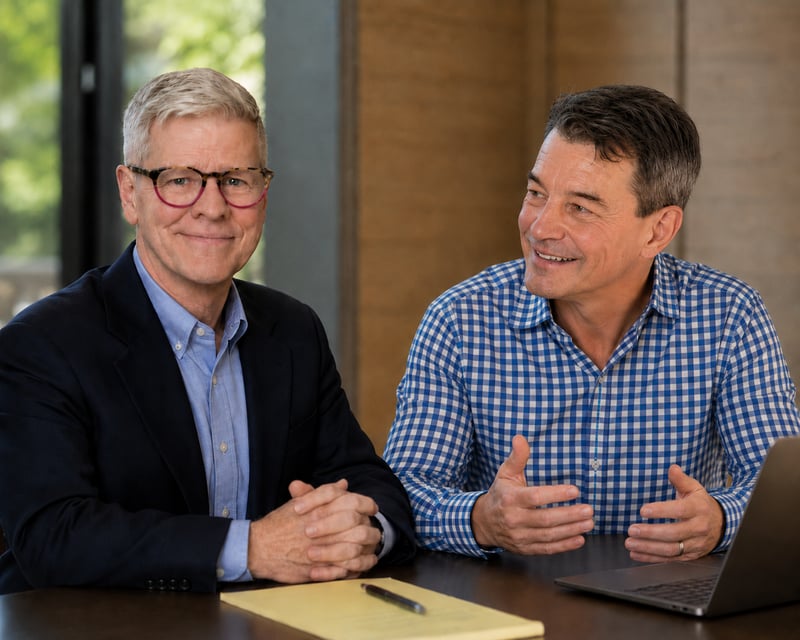
Steven Shafer and Martin Angst in conversation in June 2026. AI-enhanced photo.
Martin Angst
Steve, who did you want to be when you were 20 years old? Was it someone in medicine? What would surprise people about your younger self?
Steven Shafer
My first goal in life—and this is absolute truth—was I wanted to be a fire truck. I had a fire truck when I was a little kid, and I absolutely loved it. I wanted to be a fire truck, and I was kind of devastated when my parents explained that wasn't actually an option.
So, then my parents had a swimming pool installed, and the cement truck drivers let me sit in the cab and play with the controls. For a while I absolutely wanted to be a cement truck driver. That didn't pan out either.
Then I wanted to be my pediatrician. He was just the nicest guy. I loved him. He was kind, smart, and he always seemed to know exactly what to do. I thought: that's what I want to be. So, I went to medical school fully expecting to become a pediatrician. But I had migraines, and they were triggered by noise—by kids screaming and being loud. And I realized that pediatrics was probably not going to work for me.
So, I had to rethink things. And then I discovered anesthesiology. What fascinated me was that anesthesiology combined physiology, pharmacology, mathematics, and engineering. It was quantitative and I like quantitative things. You could make predictions. You could test them. You could immediately see the consequences of your decisions and hopefully you'd get better over time.
So, in some sense, I ended up exactly where I was supposed to be—but it certainly wasn't the plan.

Shafer in July 2026, living out his first goal in life with his grandson Asa, age 2. Photo courtesy of Steven Shafer.
Martin Angst:
I came to Stanford planning to stay for two years and somehow ended up staying for an entire career. Looking back on your own journey, what is the most important thing Stanford gave you, and what did you hope to give back?
Steven Shafer:
The most important thing Stanford gave me was mentorship. Don Stanski was my primary mentor. Don continues to be a mentor. Decades later, I still look to him as a mentor.
What makes Don special is that he has incredibly high standards, but he is also extraordinarily generous with his time and ideas. He challenges you constantly. He makes you think harder. But he also gives you the confidence to tackle difficult problems and the freedom to pursue them. Don never told me what to think. He taught me how to think. And that's a much more enduring gift.
Ron Pearl was another extraordinary mentor. Ron saved my career on multiple occasions. At one point I thought I was done with academics. I had joined a company that went public, and on my Excel spreadsheet I was a gazillionaire. I actually offered Ron my faculty position back. Ron looked at me and said, "I don't really need your spot. You don't know what the future's going to hold."
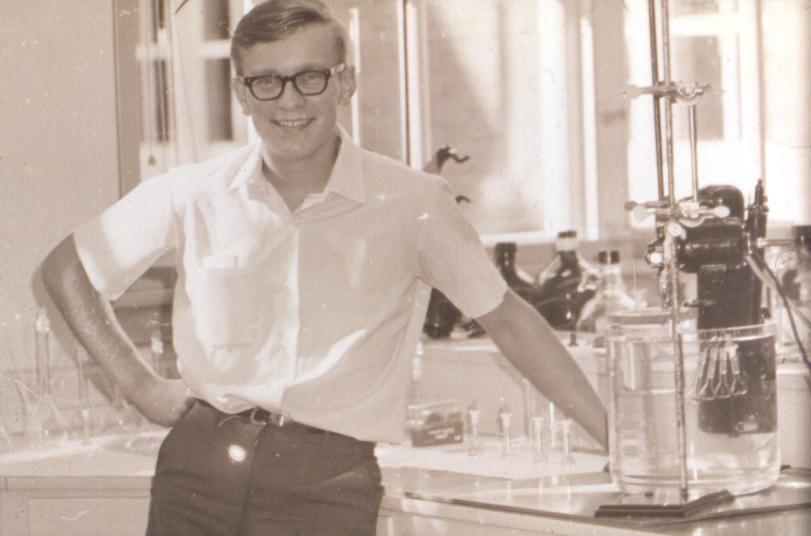
A young Donald Stanski, Shafer's mentor. Photo courtesy of Steven Shafer.
Of course, two months later the stock market crashed. I went from being a gazillionaire to essentially nothing. I came back to Stanford with my tail between my legs, and Ron stepped in and saved my bacon. So, when I think about Stanford, I think first about mentors.
Martin Angst:
Is there something uniquely Stanford about this? Something cultural?
Steven Shafer:
Yes, absolutely. My wife Pamela, who was also a faculty member in our department, once had a statistical problem and ended up in Brad Efron's office. Pamela had zero-inflated data, and she submitted a request to Stanford's biomedical statistics consulting service. A little while later she received a note saying, "Please come to my office at such-and-such a time."
So, she walks over to the statistics building at Stanford, knocks on the door, and discovers that the person waiting for her is Brad Efron. Now, Brad Efron is one of the greatest statisticians in the world. He invented the bootstrap. He could have been intimidating. Instead, he was approachable, genuinely interested, and completely engaged in helping her solve the problem. And I remember hearing about that interaction and thinking: I need to come up with a statistical problem just so I have an excuse to meet with Brad Efron. But that's Stanford.
You can walk across campus and talk to somebody who is literally the best in the world at what they do, and they're interested—not because they have to be, but because they're curious. People aren't protecting turf. They're excited by ideas. They want to make them better. I think that's the magic of Stanford.
Martin Angst:
You developed STANPUMP and shared it freely with the world long before the term "open source" became fashionable. Why was it important to you that such a powerful tool remain accessible to everyone?
Steven Shafer:
First of all, software has bugs. If you're writing software that might eventually be used to give drugs to patients, that's a sobering thought. One of the reasons I released STANPUMP publicly was simply that I wanted people to look at it. I wanted them to find the mistakes. I wanted them to challenge the assumptions. I wanted the software to become as robust and reliable as possible.
But that was only part of the reason. The bigger reason was impact. The goal was never to own STANPUMP. The goal was to improve patient care. I believed that if I created something useful and made it available to everyone, people would build on it, improve it, and eventually use it in ways that we couldn't even imagine at the time. And that's exactly what happened.
STANPUMP became the backbone of essentially all target-controlled infusion systems worldwide. The concepts, the models, the software architecture—they found their way into clinical devices used every day around the world. To me, that's enormously gratifying. Not because it's my software but knowing that something we built in academia ultimately helped make drug administration more precise, more predictable, and safer for patients is hugely gratifying.
That's the metric that matters. We changed medicine. Our science had an impact. And I think making STANPUMP publicly available very early on was absolutely essential for that to happen. Giving something that improves the lives of patients is a success. That’s why we go into academics.
Martin Angst:
Which accomplishment are you most proud of? Not necessarily the one you are best known for.
Steven Shafer:
I'm proud that I was part of a community of clinical pharmacologists that fundamentally changed how medicine thinks about drugs.
When I started, clinical pharmacology was largely descriptive. Over time, it became quantitative and predictive. We learned how to model drug behavior, predict responses in individual patients, and use those insights to make care more precise and safer. That transformation wasn't the work of one person. It was the work of a community. And what made that community special was not just the science. It was that we shared a vision and we shared values. We believed that the purpose of pharmacology wasn't elegant mathematics for its own sake. The purpose was better patient care.
We were remarkably open with one another. We shared ideas. We shared models. We challenged each other's work honestly. If something was wrong, we said it was wrong. If something was good, we embraced it. There was a sense that we were all trying to solve the same problem. Many of the people from that community are now faculty and leaders all over the world.
The network spans continents, but the values remain remarkably similar. And when I look at medicine today and see how deeply quantitative pharmacology has become integrated into clinical care, I feel privileged to have been part of that. That's a pretty wonderful thing.
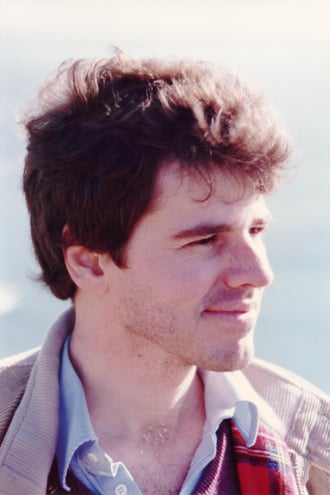
A young Shafer. Photo courtesy of Steven Shafer.
Martin Angst:
You've never struck me as someone who is afraid of taking on difficult problems. Has there been a time when something you cared deeply about didn't work out—and what did you take away from that experience?
Steven Shafer:
Oh, there isn't just one. I’ve lost track of just how many failures I’ve chocked up over my career. I've tried a lot of things that didn't work. I've started companies that failed. One startup raised a hundred million dollars in capital, only to see it go down the drain. Another went bust after going public for hundreds of millions of dollars. These are pretty spectacular failures. Don’t invest in any company that lists me as a founder!
If you're going to try to do something impactful you will probably fail. That's just the nature of trying to do difficult things. And if you're not failing regularly, you're probably not aiming high enough. The important thing isn't avoiding failure. The important thing is being honest about it. You own it. You learn from it. And then you go do the next thing and hope for a better outcome.
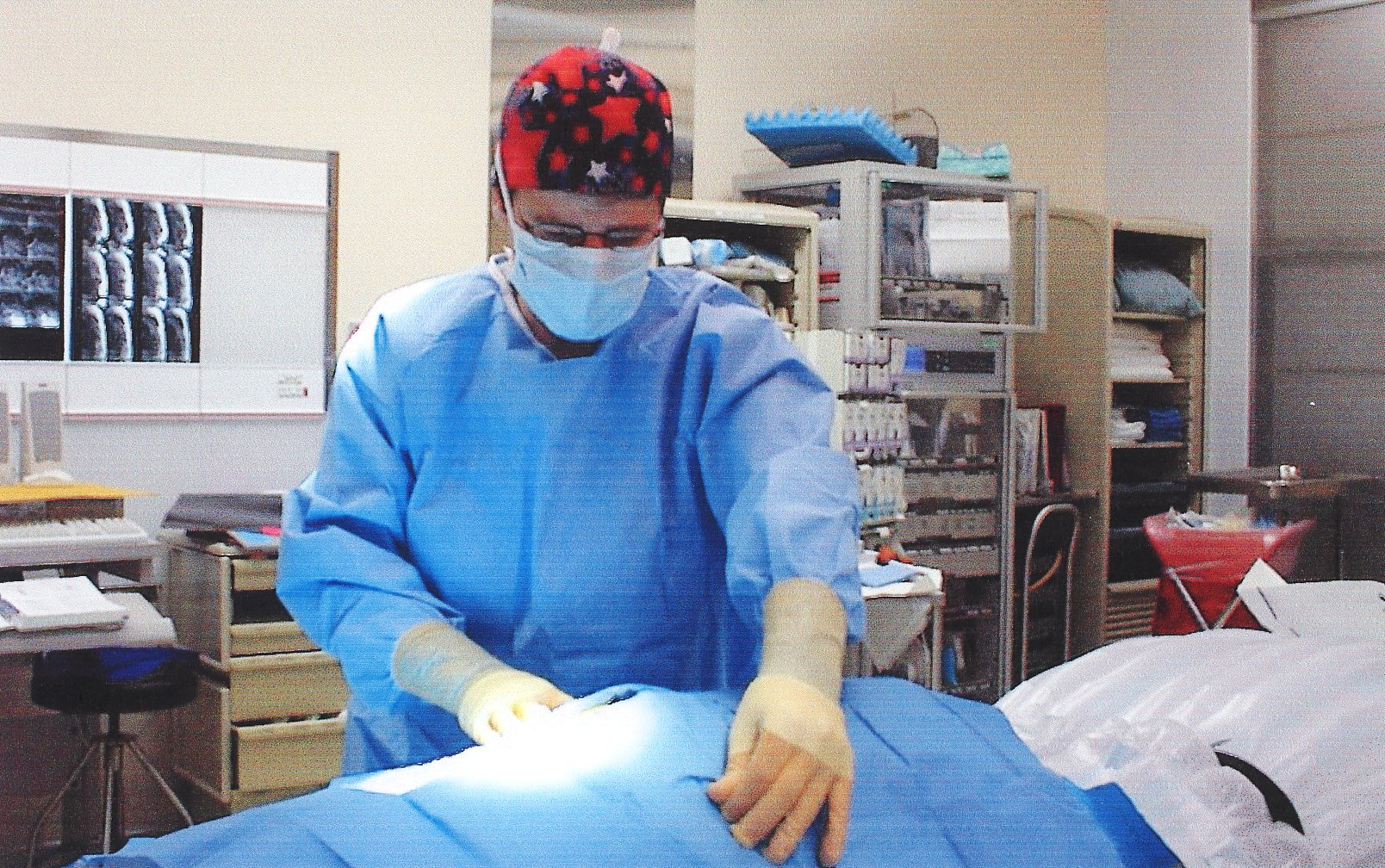
Shafer practicing anesthesiology at Stanford. Photo courtesy of Steven Shafer.
Martin Angst:
As AI is transforming medicine, what part of anesthesiology should never be delegated to an algorithm or a machine? What remains uniquely human about being a doctor?
Steven Shafer:
Anything that requires you to take responsibility. I use AI literally every day. I usually have Claude and Gemini open on my computer. I use AI when writing peer reviews. The key is that my name is on the review. Everything that AI points out, I check myself. I use AI because it'll pick up things I miss. I want to do the best job I can. But my name is on the review, so every word is my responsibility. The same is true in medicine. Use AI all you want. Use it to process information. Use it to suggest diagnoses. Use it to identify patterns that humans might miss. But the person whose name is on the chart has to take responsibility. AI cannot take responsibility. It's a machine, an algorithm. And I don't think that's going to change.
Medicine is ultimately about taking care of another human being. There are moments when the data are incomplete. There are moments when the answer isn't obvious. There are moments when things go wrong. And at those moments, somebody has to own the decision. Somebody has to stand in front of the patient and the family and say: This is what I think we should do, and this is why. That's not an algorithm. That's a physician.
Martin Angst:
You have witnessed medicine becoming more technological, more specialized, and more data-driven. Are we better doctors today than we were 30 years ago?
Steven Shafer:
The definition of better changes with the technology. Thirty years ago, the best anesthesiologist was the person who could intubate anybody with a MAC-3 blade. Twenty years ago, if you didn't use email effectively, you were at a disadvantage. Today, if you don't know how to use AI, you're going to be left behind. The future belongs to physicians who become skilled using the best available technology. The question isn't whether AI will replace doctors. It won't. The question is whether doctors who use AI will replace doctors who don't. And I think the answer to that is probably yes.
Martin Angst:
What is one thing that would surprise everyone to learn about you?
Steven Shafer:
The fact that I'm actually an incredibly serious person. I think people perceive me as the funny guy in the room. I like making people laugh, and humor is a great way to deal with some harsh realities. But I care deeply about science. I care deeply about integrity. I care deeply about people. There was a moment in my career that illustrates this really well. When I was being considered as Editor-in-Chief of Anesthesia & Analgesia, somebody remarked, 'Steve is awfully funny. Can somebody who is that funny be Editor-in-Chief of a major scientific journal?'
Well, the answer turned out to be yes. Humor is part of being human. You can be rigorous and funny. You can be intellectually serious without taking yourself too seriously. In fact, I think the latter is probably a pretty good way to live.
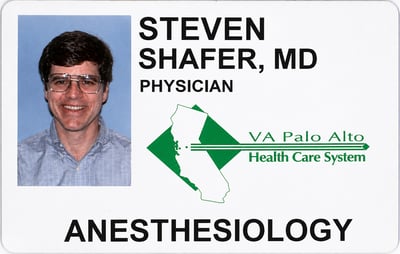
Shafer's VA ID card from 1993. Image courtesy of Steven Shafer.
Martin Angst:
Steve, imagine young anesthesiologists reading this interview twenty years from now. What do you hope they will say about your generation of anesthesiologists? What legacy do you hope we leave behind?
Steven Shafer:
I would hope people would know that I tried to make a difference. I tried to advance patient care. I tried to advance science. I tried to advance publication ethics. I made lots of mistakes. I am responsible for many failures. However, it would be nice if people looked back and said that all of us who worked together were dedicated to making medicine a little better than we found it.